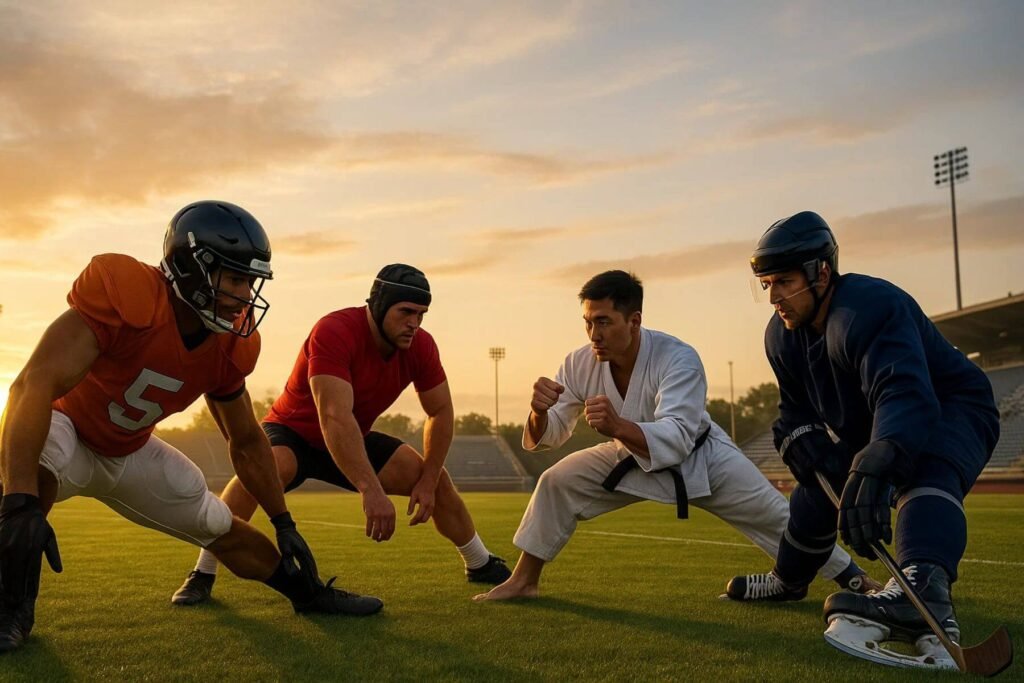
Playing contact sports like football, rugby, hockey, and martial arts can be incredibly rewarding. They build strength, teamwork, discipline, and endurance. But with high-intensity physical interaction also comes the increased risk of injuries. From concussions and sprains to fractures and dislocations, the consequences can be serious. The good news is that many of these injuries are preventable with the right precautions and habits. Whether you’re a weekend warrior, a student athlete, or a professional competitor, injury prevention should be a top priority.
Here are 10 effective ways to prevent injuries while playing contact sports that can keep you safe, strong, and in the game longer.
1. Prioritize proper warm-ups and cool-downs
One of the most underrated aspects of athletic performance and safety is the warm-up. Starting your practice or game without properly preparing your muscles and joints is like driving a car in freezing weather without letting the engine run a bit first. A solid warm-up increases blood flow, improves flexibility, and gets your muscles ready for impact and movement.
Dynamic stretches like leg swings, arm circles, and light jogging can help activate your entire body. After the activity, a cool-down session that includes static stretching can reduce muscle soreness and help prevent future tightness or injuries. Making warm-ups and cool-downs a non-negotiable part of your routine will go a long way in preventing strains, tears, and muscle fatigue.
2. Use the right protective gear and use it correctly
Gear exists for a reason: to protect your most vulnerable areas during high-impact collisions. Yet, many athletes either neglect wearing proper protective equipment or fail to use it correctly. Helmets, mouthguards, pads, gloves, shin guards, and braces must fit properly and be sport-specific.
For instance, a football helmet must meet industry safety standards and be properly secured, while a martial artist might require different padding altogether. Wearing ill-fitting gear is almost as bad as wearing none at all—it can shift during play and leave you exposed. Always inspect your gear before use, replace anything damaged, and don’t skip safety just because it feels uncomfortable. Protection should never be compromised for style or convenience.
3. Build strength and stability year-round
Injury prevention doesn’t just happen during the season. Strength training is a key factor in preparing your body for the rigors of contact sports. A well-rounded fitness program that targets major muscle groups, as well as stabilizers around the knees, shoulders, and core, will help you absorb impact better and reduce the chance of sudden injuries.
Focus on functional movements, balance exercises, and resistance training that mimic the actions of your sport. Strong muscles act like armor for your bones and joints. Stability, particularly around the ankles and knees, can make the difference between staying upright and suffering a painful sprain or ACL tear.
4. Master proper technique
Technique isn’t just about performance—it’s directly tied to safety. In nearly every contact sport, there are correct ways to tackle, block, fall, roll, or land. Learning and mastering these techniques under the guidance of trained coaches significantly reduces the risk of injury.
For example, rugby players are taught to lead with the shoulder when tackling, rather than the head, to avoid concussions. Wrestlers learn how to fall and absorb impact without damaging their spines or wrists. Practicing these techniques consistently builds muscle memory and helps athletes react safely in fast-moving situations. Skipping the fundamentals or developing bad habits can be dangerous over time.
5. Respect the rules of the game
Rules in contact sports aren’t just for fairness—they’re also designed with safety in mind. When athletes ignore or break the rules, they increase the risk of hurting themselves or others. Targeting, late hits, tripping, and dangerous tackles are often penalized for good reason.
Understanding and respecting the boundaries of your sport ensures that everyone plays on equal footing. This creates a safer environment where physicality is controlled, not chaotic. Coaches should also reinforce rule-based play and make sure that aggressive behaviors or illegal moves are corrected during training.
6. Don’t ignore pain or minor injuries
Athletes are often taught to “tough it out” and play through pain, but this mindset can lead to long-term consequences. Ignoring minor injuries or persistent soreness may turn a small issue into a major one. For example, continuing to play with a slight ankle sprain can worsen the damage, leading to ligament tears or chronic instability.
Listening to your body is one of the smartest things you can do. If something feels wrong—whether it’s sharp pain, swelling, numbness, or stiffness—it’s best to stop and assess the situation. Rest, ice, compression, and elevation (RICE) can often help with minor issues, but persistent pain should be evaluated by a medical professional.
7. Stay hydrated and maintain proper nutrition
What you put into your body directly affects how well it performs—and how well it recovers. Dehydration can lead to cramping, fatigue, and slower reaction times, all of which increase the likelihood of injury. Staying hydrated before, during, and after games is essential.
Nutrition also plays a critical role in injury prevention. Adequate protein helps repair muscles, while calcium and vitamin D support strong bones. Carbohydrates fuel performance, and healthy fats support joint health. Skipping meals, crash dieting, or overtraining without fueling properly will leave your body vulnerable to breakdowns and slower healing.
8. Get enough rest and sleep
Sleep isn’t just for recovery—it’s essential for performance and injury prevention. During deep sleep, your body undergoes critical repair processes. Muscles heal, inflammation is reduced, and your nervous system resets. Without proper rest, reaction times slow down, focus diminishes, and fatigue sets in faster—all factors that increase your risk of getting hurt.
In addition to nightly sleep, rest days are just as important. Overtraining without giving your body time to recover can lead to stress fractures, muscle imbalances, and burnout. Incorporate at least one full day off from intense activity each week and listen to signs of fatigue.
9. Cross-train to balance your body
Playing the same sport year-round or doing the same movements repetitively can lead to overuse injuries. Cross-training helps prevent this by engaging different muscle groups and reducing repetitive strain. For example, a football player might add swimming to improve cardiovascular health without the joint impact. A martial artist may practice yoga to enhance flexibility and balance.
Cross-training not only gives overworked muscles a break but also builds total-body strength and coordination. This creates a more balanced and injury-resistant athlete. Incorporating other physical activities into your routine also helps you stay mentally fresh and more adaptable on the field.
10. Regular checkups and injury screenings
Lastly, preventive care from medical professionals should be part of every serious athlete’s toolkit. Sports physicals, physical therapy assessments, and mobility screenings can detect issues before they turn into injuries. Identifying muscle imbalances, joint restrictions, or early signs of wear can lead to targeted interventions, such as corrective exercises or rehabilitation plans.
Many injuries don’t happen overnight. They develop over time due to bad movement patterns, poor posture, or structural weaknesses. Seeing a sports medicine specialist or physiotherapist at least once a year (or more if you play at a competitive level) can provide insights that help you play safer and longer.
Bottom line
Contact sports will always come with a certain level of risk. But risk doesn’t mean inevitability. By taking a proactive approach—through preparation, smart training, gear, and recovery—you can significantly lower your chances of injury and enjoy the full experience of your sport.
Injury prevention isn’t about holding back or being overly cautious. It’s about being smart, consistent, and respecting your body. Whether you’re an amateur or elite athlete, these habits form the foundation of a long, healthy, and successful sports journey.